
Boeing’s Archer Deal Shows Why Strategic Focus Is an Industrial Capability
- Operations Patriot Industrial Partners
- 12 hours ago
- 6 min read
How Boeing’s planned transfer of Wisk, Insitu, and SkyGrid demonstrates the value of aligning capital, leadership, and operational capacity with core production priorities.
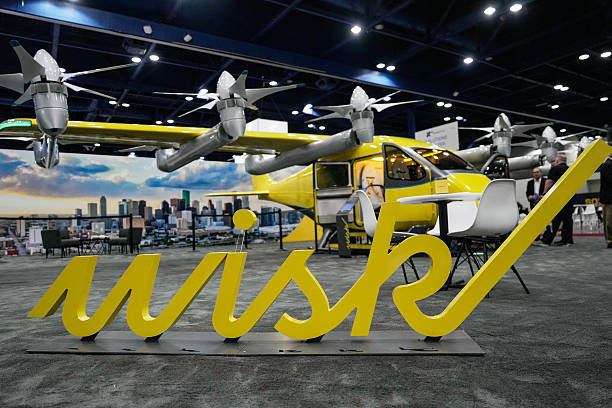
Boeing’s planned transfer of Wisk Aero, Insitu, and SkyGrid to Archer Aviation initially appears to be a portfolio restructuring. At a deeper level, the agreement demonstrates an important principle of industrial strategy: focus is itself an operational capability.
Under the definitive agreement announced on August 10, 2026, Archer plans to acquire the three Boeing subsidiaries. Boeing will receive newly issued Archer shares equal to 19.75 percent of Archer’s Class A shares outstanding immediately before closing, subject to customary adjustments. Boeing will also receive warrants to purchase additional shares, retain access to Wisk’s core autonomous-flight technology, and gain the right to designate one Archer director while it maintains the ownership level required by the agreement.
The transaction is expected to close by the end of 2026, subject to regulatory review and customary closing conditions. If completed, the structure could allow Boeing to maintain exposure to emerging aerospace industries without remaining responsible for operating every business developing those technologies.
That distinction matters as Boeing works on improving performance across some of the largest and most complex commercial aircraft and defense programs in the United States.
Concentrating Resources on Core Aircraft Programs
Wisk, Insitu, and SkyGrid contribute distinct capabilities to the future of aerospace and air transportation. Wisk is developing Generation 6, an autonomous, all-electric air taxi designed for vertical takeoff and landing. The winged eVTOL aircraft uses six tilting forward propulsion units and six fixed lift units to support vertical flight and efficient forward travel. Its development involves electric motors, redundant flight-control systems, autonomous technology, and an electric propulsion system designed around commercial aviation safety requirements.
Insitu designs, manufactures, and supports unmanned aircraft systems for defense, intelligence, surveillance, reconnaissance, and other missions. Its platforms include winged aircraft as well as vertical takeoff and landing capabilities designed for expeditionary operations. The company reports more than 1.6 million operational flight hours and a customer footprint spanning 35 countries.
SkyGrid develops digital airspace-integration and air-traffic-management capabilities intended to support the safe operation of autonomous aircraft in shared airspace. Its work includes high-assurance services, aeronautical data integration, surveillance, cybersecurity controls, and operational tools for advanced air mobility.
These technologies could help shape the future of commercial and military aviation. However, moving them through research and development, flight testing, certification, full-scale production, and market adoption requires substantial capital, specialized leadership, and organizational attention.
Those same resources are also essential to Boeing’s existing commercial aircraft production, supplier recovery efforts, quality improvements, certification milestones, and defense programs.
Boeing entered the second half of 2026 with a record company backlog of $715 billion, including more than 6,200 commercial airplanes. According to the company’s second-quarter results, the 737 program began transitioning toward a production rate of 47 aircraft per month. Boeing also activated low-rate initial production on its new 737 North Line in Everett, Washington.
At the same time, the company is advancing certification of the 737-7, 737-10, and 777-9, stabilizing higher 787 production, and managing major defense programs such as the F-47, T-7A, MQ-25, KC-46, and VC-25B.
In this environment, the central question is not whether autonomous aircraft, electric propulsion, or advanced air mobility have long-term potential. The question is whether Boeing remains the best operating home for these businesses while addressing more immediate production and program priorities.
Strategic Focus Extends Beyond Financial Capital
Industrial companies often evaluate strategic decisions through investment requirements, projected returns, and market growth. Those measures matter, but they do not capture the full cost of managing a diverse portfolio.
Management attention is finite. Engineering capacity, manufacturing expertise, supplier-development resources, factory space, and program leadership are also limited. Every additional business consumes some portion of those resources, even when it operates with considerable independence.
This is especially important throughout the aerospace industry, where aircraft designed for new commercial or military missions must pass through demanding development, testing, certification, production, and sustainment cycles. An innovative air taxi, fixed-wing aircraft, autonomous control system, or electric aircraft can still struggle if the supporting organization cannot turn the technology into a safe, reliable, and repeatable product.
Moving from a prototype to full-scale production requires much more than completing the initial aircraft design. Manufacturers must establish qualified suppliers, repeatable manufacturing processes, quality controls, production schedules, configuration management, maintenance systems, and customer support.
These industrial requirements apply across propulsion technologies. Aircraft powered by electric motors and an electric propulsion system face different engineering and infrastructure challenges than aircraft powered by conventional jet engines, but both require disciplined production systems and rigorous quality assurance.
Strategic focus, therefore, cannot be separated from production performance. Decisions made at the portfolio level eventually affect factory capacity, supplier priorities, capital investment, quality, and customer deliveries.
Through the planned transfer of Wisk, Insitu, and SkyGrid to Archer, Boeing could reduce some of the operating burden associated with developing and commercializing these technologies. The transaction could also allow Boeing to devote more internal capacity and leadership attention to its core production system and commercial and defense backlog.
Maintaining Access to Future Aerospace Technology
Boeing is not withdrawing completely from autonomous aviation, electric aircraft, or advanced air mobility. Through the transaction, Boeing would retain access to Wisk’s core autonomous-flight technology for current and next-generation commercial and defense aircraft. Boeing and Archer also plan to establish an ongoing strategic collaboration and technology-sharing arrangement.
This creates a potentially valuable middle ground. Boeing could maintain access to advanced technology and participate in Archer’s future growth without carrying all the costs, liabilities, and management demands associated with operating the three businesses directly.
That is particularly relevant in emerging aerospace markets, where development cycles remain uncertain and full-scale commercialization may take years. Electric vertical takeoff and landing aircraft still face significant certification, infrastructure, production, public acceptance, and economic challenges before air taxi services can become a common part of air transportation.
The agreement gives Boeing a way to preserve potential long-term upside while concentrating more near-term investment on its core responsibilities.
Archer Gains the Pieces of a Broader Aerospace Platform
For Archer, the agreement represents more than the planned acquisition of an air taxi competitor. It could bring together several complementary layers of aerospace technology.
Wisk would contribute to autonomous vertical takeoff and landing aircraft development. Insitu would add established unmanned aircraft systems, manufacturing experience, defense customers, and extensive operational history. SkyGrid would contribute digital airspace integration and air-traffic-management capabilities.
Archer would combine those businesses with its Midnight electric aircraft, its ZEE artificial-intelligence platform, and Halo and Thunder. Halo and Thunder are the commercial and defense variants of an autonomous hybrid VTOL platform jointly developed with Anduril.
According to the joint announcement from Boeing and Archer, Wisk, Insitu, and SkyGrid bring nearly two million combined flight hours. Boeing and Archer also said the transaction would add a profitable defense business generating more than $200 million in annual revenue, primarily through Insitu.
If the transaction closes, Archer’s challenge will be integrating those technologies and organizations into a coherent operating model. Developing electric motors, autonomy software, fixed wings, batteries, sensors, safety-critical control systems, and electric propulsion systems involves different engineering and manufacturing capabilities. The combined organization would also serve customers with different safety, regulatory, procurement, security, and mission requirements.
The planned combination may give Archer the foundation for a broader aerospace and defense company. Technology alone, however, will not determine the outcome. Archer must demonstrate that it can integrate the businesses, retain critical talent, protect customer relationships, and move emerging platforms toward certification and full-scale production.
A Broader Lesson for the United States Industrial Base
The Boeing and Archer agreement provides a useful lesson for manufacturers throughout the United States industrial base.
Major aerospace and defense manufacturers must balance investment in current production programs with research and development for the next generation of aircraft. Smaller manufacturers face a similar challenge when deciding which products, facilities, technologies, and customer markets deserve additional capital.
Companies often accumulate product lines, facilities, and business units because each offers individual value. Over time, however, the overall portfolio can become more complex than the operating system can effectively support.
Leadership teams must periodically determine which capabilities are central to the company’s competitive advantage, which require additional investment, and which could create more value under a different owner or partnership structure.
Those decisions should not be treated merely as cost-cutting exercises. The objective is to align capital, production capacity, people, and management attention with the areas where an organization is best positioned to execute.
A company can participate in a promising market without directly owning every part of the value chain. Equity investments, technology-sharing agreements, licensing arrangements, joint ventures, and strategic partnerships can preserve access to innovation while allowing the organization to concentrate on its most important operating priorities.
Strategic Focus Must Produce Operational Results
The transaction does not automatically resolve Boeing’s production, quality, or program challenges. It also does not guarantee that Archer will successfully integrate and industrialize the technologies it plans to acquire.
For Boeing, success will be measured through improving performance across its factories and programs. That includes safer and more predictable production, stronger supplier performance, successful certification milestones, improved defense program execution, and consistent commercial aircraft deliveries.
For Archer, success will depend on turning a collection of advanced technologies into scalable, certifiable, and supportable aerospace products. The company would need to integrate organizations with different aircraft designs, customers, manufacturing systems, and operating cultures while continuing to develop its air taxi and defense platforms.
The broader industrial lesson is clear. Strategy is not simply the process of identifying attractive technologies or growing markets. It also requires companies to decide where their limited resources can produce the greatest operational value.
In complex manufacturing, focus is not a retreat from innovation. When supported by disciplined capital allocation, effective partnerships, and consistent execution, strategic focus can become a lasting competitive advantage.


Comments